Why Tiergarten belongs on every free itinerary
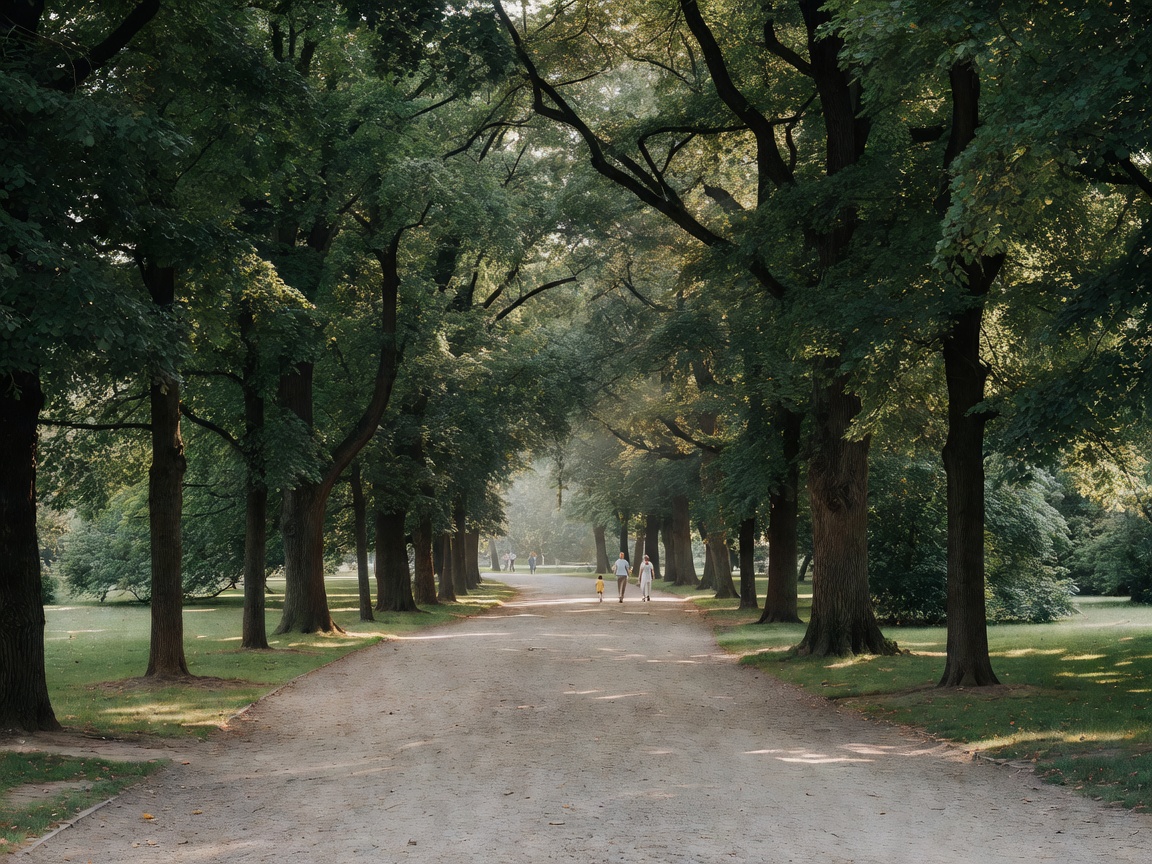
Berlin's best-known park covers roughly 210 hectares between the Brandenburg Gate in the east and the Zoologischer Garten station in the west. It began as a hunting ground for the Electors of Brandenburg, was reshaped into a public landscape park by the garden designer Peter Joseph Lenné in the nineteenth century, and was almost entirely cut down for firewood during the hard winters after 1945. Most of the trees you walk beneath today were replanted from the late 1940s onward, which gives the park an unusual character: historic in its layout, comparatively young in its canopy.
Access costs nothing. There are no gates, no ticket desks and no closing time. You can cross it on a commute, spend a slow afternoon on its lawns, or use it as the green corridor linking several of Berlin's major sights on foot.
What to see
- The Victory Column (Siegessäule). The gilded column at the centre of the Großer Stern roundabout is the park's landmark. Walking around it is free; climbing to the viewing platform carries a small charge.
- The Soviet War Memorial. Built in 1945 on Straße des 17. Juni, close to the Brandenburg Gate, it is free and open to visitors.
- Neuer See. The largest lake in the park's western half, with a beer-garden café and rowing boat hire (both paid, both optional).
- Rousseau Island and Luiseninsel. Quieter, more formal corners in the southern part of the park, good for a pause away from the main avenues.
- The English Garden. Laid out in the early 1950s near Schloss Bellevue, the official residence of the Federal President, with a thatched tea house at its edge.
- Memorials on the eastern edge. The Memorial to the Sinti and Roma of Europe Murdered under National Socialism stands near the Reichstag, and the Memorial to Homosexuals Persecuted under Nazism is opposite the Memorial to the Murdered Jews of Europe. All are free.
Opening times and access
The park itself never closes. Cafés, the Victory Column platform and boat hire keep their own seasonal hours. Paths are lit only along the major roads, so after dark most visitors stay on the main avenues. Cyclists share many paths with pedestrians, and the Straße des 17. Juni is regularly closed to traffic for large public events, which can make the eastern half crowded.
Getting there: routes and entry points
Because the park has no single entrance, the right station depends on which part you want to see first:
- S+U Zoologischer Garten — western edge, closest to Neuer See.
- S Tiergarten — on Straße des 17. Juni, west of the Großer Stern.
- S Bellevue — northern side, near Schloss Bellevue and the English Garden.
- S+U Brandenburger Tor — eastern edge, for the memorials and the Reichstag.
- Bus 100 — a regular city bus running between Zoologischer Garten and Alexanderplatz that passes the Victory Column, useful as a free-to-ride-with-your-ticket sightseeing line.
Suggested walk: from Zoologischer Garten, head east past Neuer See to the Großer Stern, continue along Straße des 17. Juni to the Soviet War Memorial and finish at the Brandenburg Gate. The direct line is a little over three kilometres; detours to the islands and the English Garden add more.
Pros and cons
Pros
- Genuinely free, with no hidden entry costs
- Shade and water — pleasant in summer heat
- Connects major sights on foot
- Open at any hour
Cons
- Main roads cut through the park and carry traffic noise
- Eastern half gets crowded during events
- Few free toilets; cafés are the main option
- Poorly lit away from main avenues at night
Tiergarten compared with Tempelhofer Feld
The two parks are opposites. Tiergarten is enclosed, wooded and shaded, with water and monuments at every turn; Tempelhofer Feld is flat, open and almost treeless, with wind and sky as its main features. Choose Tiergarten for a hot day, a walk combined with sightseeing, or a late evening stroll. Choose Tempelhofer Feld for cycling, skating, kites or the sheer sense of space. Tiergarten is also open around the clock, while Tempelhofer Feld locks its gates around sunset.
Practical tips
- Bring a picnic: lawns near the Neuer See and the English Garden are popular and free to use.
- Combine with the Topography of Terror, a walk of roughly twenty minutes south via Potsdamer Platz.
- Check event calendars on the official Berlin portal before visiting the eastern half on a weekend.